
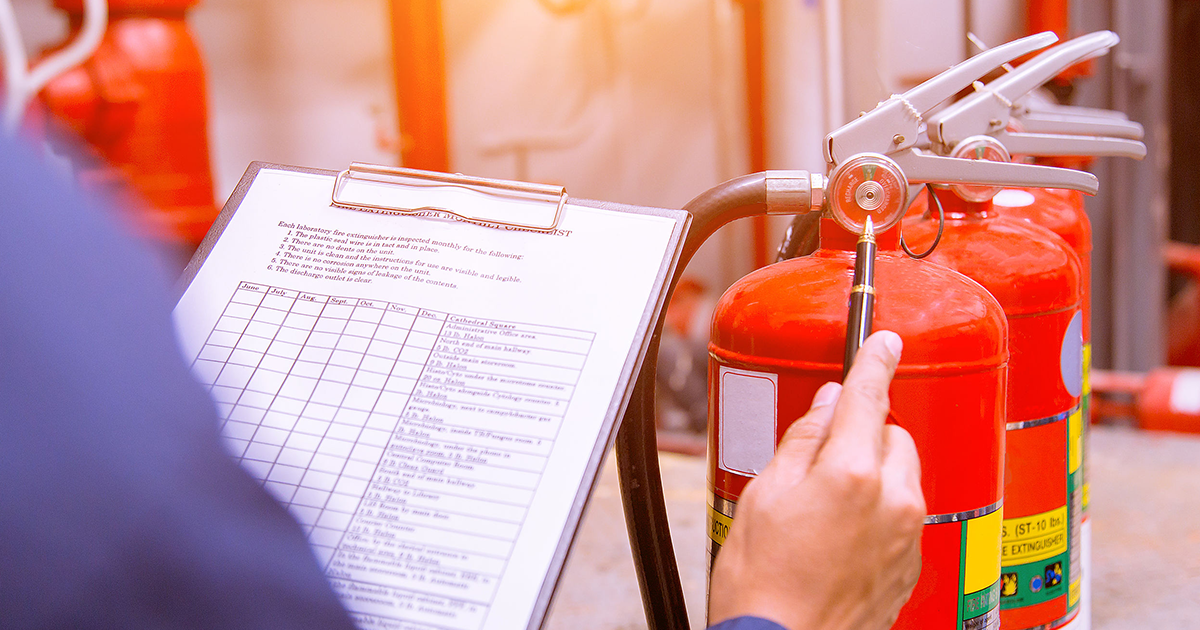
A fire risk assessment gives a business a structured way to understand where a fire could start, who could be affected and which controls need attention. It should reflect the actual building, its activities and its occupants. A generic checklist cannot replace a competent review of the premises.
What should a fire risk assessment examine?
The starting point is the way the site is used. An office, warehouse, hotel, hospital and data center have different equipment, materials, occupancy patterns and operational priorities. A reviewer should examine normal work as well as maintenance, deliveries and temporary activities.
- Ignition sources: electrical equipment, hot work, heating equipment and other activities that could start a fire.
- Fuel and storage: combustible materials, packaging, waste, liquids and the way they are stored or separated.
- People and escape: employees, visitors and contractors, including anyone who may need additional assistance to leave safely.
- Protection systems: detection, alarms, suppression, fire doors, emergency lighting and the interfaces between systems.
- Operations: inspection records, maintenance arrangements, staff instructions and emergency procedures.
Turn findings into an action plan
The assessment should identify each significant finding, its location and the action needed. Assign an owner and a review date. Immediate hazards should be addressed promptly; more complex engineering changes may need a designed solution, approved equipment and coordinated installation. The resulting record should be clear enough for the facilities team to follow and update.
Protection equipment also needs to match the hazard. A server room, for example, may require a different approach from a warehouse or pump room. Selection of detection and suppression systems should consider the protected space, operating conditions, evacuation strategy and interfaces with the wider building. Learn more about UDCT’s fire and life safety capability and testing and maintenance support.
When should the assessment be reviewed?
Review it when the building use changes, occupancy increases, equipment is added, storage arrangements change, an incident occurs or a system is modified. Periodic review also helps confirm that previously agreed actions were completed and that protection systems remain ready for use. The appropriate review schedule depends on the site and applicable local requirements.
Prepare the site team
Before a review, gather current drawings, equipment information, inspection records and previous findings. Walk the site with people who understand daily operations. Confirm that emergency routes are accessible and that the team knows how to report a concern. A useful assessment combines observations, records and input from the people who use the building.
Fire risk assessment is only one part of a wider safety programme. Businesses should use suitably qualified professionals to determine the requirements that apply to their facility and to verify the final design and response arrangements. If the findings call for engineered fire protection, contact UDCT to discuss the relevant system scope.