
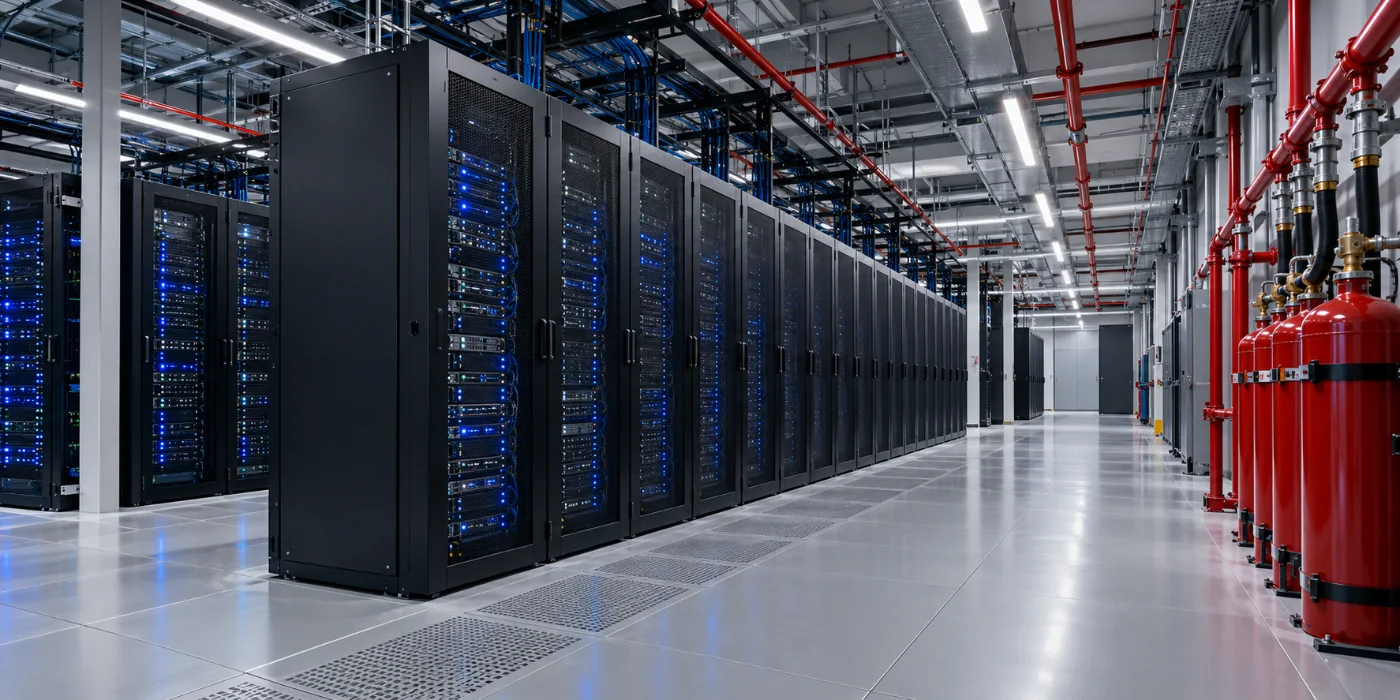
Engineering for Data Centers
Data centers bring IT spaces, electrical equipment, cooling infrastructure and supporting rooms into a tightly connected facility. Engineering decisions need to consider the function of each room, the systems serving it and the operating procedures used to manage changes.
UDCT connects discussions on fire protection, detection, low current infrastructure, automation and building services around the agreed project requirements. A useful brief defines the facility arrangement, room use, equipment interfaces and available documentation. This page describes engineering considerations without implying a specific facility certification, availability classification or guaranteed operating performance.
Project priorities
Protection coordinated with room use
IT areas, electrical rooms, battery spaces and support facilities may require different design decisions. Detection and suppression arrangements should follow the approved design basis and equipment documentation. Room boundaries, ventilation interfaces, penetrations and access for inspection need to be coordinated between the relevant design and installation packages.
Defined monitoring and control interfaces
Alarm conditions, equipment status and control actions should be mapped to the systems that receive or initiate them. An agreed interface schedule helps define the relationship between protection systems, building management and operational monitoring. Testing should verify the specified sequence and preserve clear records of the demonstrated functions.
Change planning and maintainability
Existing facilities may have strict work authorization and change procedures. Identify the affected equipment, isolation boundaries and rollback arrangements before intrusive work. Equipment locations, labels and service clearances should help the operating team inspect and maintain systems without relying on incomplete or outdated information.
Typical environments
IT halls, communications rooms, electrical and cooling support areas, operations spaces and associated data center infrastructure. The scope and interfaces should be established from the client’s facility brief and approved design documents.
From project brief to handover
UDCT brings fire protection, connected systems and building services into a coordinated project discussion. The starting point is the facility brief: intended use, operational constraints, system boundaries, existing equipment and the documentation required by the client and consultant. This helps define a practical scope before equipment selection or procurement.
During technical development, the team reviews drawings, equipment schedules, control interfaces and installation access against the agreed requirements. Supply and site activities are then coordinated with the wider project programme. Testing, commissioning and handover records should demonstrate how the installed systems relate to the approved design and provide the operating team with usable information.
For an existing facility, share available drawings, equipment details, maintenance history and any restrictions on shutdowns or access. For a new development, share the design brief, specifications and programme. Our team can then discuss the services relevant to the project, the information needed for a technical proposal and the responsibilities to be agreed with other parties.
Frequently asked questions
Can existing data center systems be reviewed for a defined project?
Share the relevant drawings, equipment schedules, interface requirements and change restrictions. UDCT can discuss the proposed scope and the information needed for a technical review.
Does this service imply a facility availability certification?
No. Any certification or availability requirement must be identified in the project brief and addressed by the responsible parties through the applicable project process.
Explore our engineering capabilities, review published sector project references, or contact UDCT to discuss your project scope. The final system selection and delivery responsibilities are defined by the approved project documents and agreed contract.