
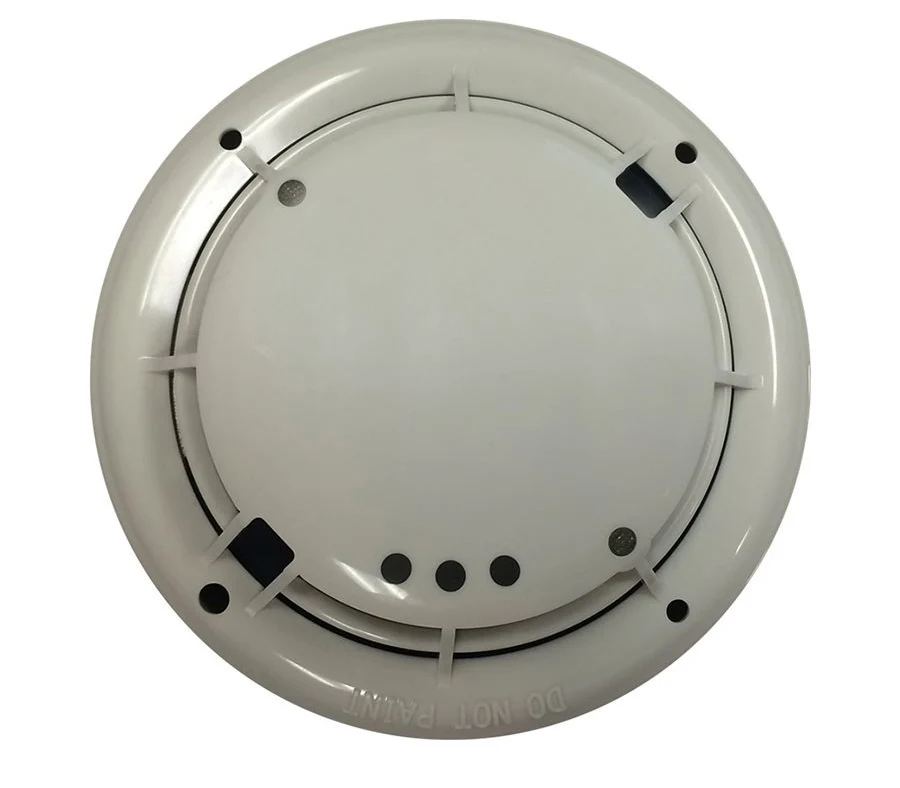
Product overview
The VES VF2014 combines photoelectric smoke, thermistor heat and carbon-monoxide sensing in a compatible addressable fire alarm system. Its programmable operating modes allow the system designer to select the documented detection functions for the application. The sensor, control panel and any sounder base must be assessed together, including the alarm patterns, environmental limits and CO sensing-cell maintenance requirements.
Technical specifications
| Brand / product range | VES |
|---|---|
| Product / system | VF2014 CO / COHb / Smoke / Heat Sensor |
| Product type | Fire Detection |
| Product family | Fire Detection & Alarm |
| Subcategory | Addressable Initiating Devices |
| Model | VF2014-00 |
| Sensing functions | Photoelectric smoke / thermistor heat / carbon monoxide |
| Operating modes | 16 programmable modes based on nine detection factors |
| Operating voltage | 17–41 V DC |
| Maximum alarm current | 30 mA |
| Protocol | VES DCP |
| Smoke sensitivity | 0.77–3.47% per foot |
| Fixed heat range | 135°F–150°F |
| Rate-of-rise threshold | 15°F per minute |
| CO sensor service life | 10 years, as stated in manufacturer sheet; maintenance and replacement instructions apply |
| Operating temperature | 14°F to 122°F |
| UL installation temperature | 32°F to 120°F |
| Humidity | Up to 95%, non-condensing |
| Dimensions | 3.94 inch diameter x 1.56 inch height |
| Weight | 4.2 oz |
| Documented base options | VF7001 / VF7002 / VF7005; confirm listed combination |
Key features
- Model: VF2014-00
- Sensing functions: Photoelectric smoke / thermistor heat / carbon monoxide
- Operating modes: 16 programmable modes based on nine detection factors
Applications
Compatible installations whose approved detection strategy requires combined smoke, heat and carbon-monoxide monitoring. Select the documented operating mode and listed panel/base combination for the project.
Selection and project integration
Share the fire alarm drawings, equipment schedule, compatible panel platform and cause-and-effect requirements with UDCT. Selection should confirm device protocols, supported interfaces, circuit supervision, power and standby calculations, and the exact enclosure or module arrangement.
Use the current manufacturer documentation to check compatibility, wiring limits, software requirements and approval scope. Commissioning should verify the configured alarm, fault, indication and control functions as part of the complete system. Remote reporting also requires a compatible receiving service and confirmation of local network availability.
Manufacturer documents
Official product reference
View this product on the manufacturer website (opens in a new tab)