
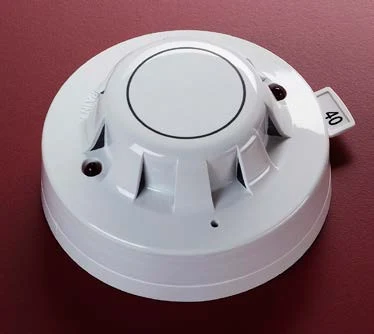
Product overview
The VES VF5600 Discovery ionization smoke sensor reports chamber conditions to a compatible addressable control panel. Its processing includes drift compensation and five selectable operating modes, with the address retained in the XPERT card at the mounting base. Select the detector, base, panel protocol and operating mode as one compatible arrangement. Airflow and the expected fire signature influence suitability; the ionization sensing method and its documented handling requirements should be considered before procurement.
Technical specifications
| Brand / product range | VES |
|---|---|
| Product / system | VF5600 Discovery Ionization Detector |
| Product type | Fire Detection |
| Product family | Fire Detection & Alarm |
| Subcategory | Apollo Addressable |
| Model | VF5600-00 |
| Detection principle | Ionization smoke sensing |
| Compatible panel family | Elite / Elite RS with the documented Apollo-protocol configuration |
| Operating modes | Five, selected for the approved detection strategy |
| Addressing | XPERT card in the mounting base |
| Operating voltage | 17–28 V DC |
| Standby current | 500 µA |
| Alarm current with LED | 3.4 mA |
| Continuous operating temperature | 32°F to 140°F |
| Minimum operating temperature | −4°F only without condensation or icing |
| Dimensions | 3.93 inch diameter x 1.65 inch high; 1.96 inch in base |
| Detector weight | 3.68 oz |
| Radioactive isotope | Americium 241, as identified in the manufacturer sheet |
| Accessories | Compatible base and address card ordered separately |
| Airflow note | Continuous operation above 400 feet/minute is not recommended in the referenced sheet |
Key features
- Model: VF5600-00
- Detection principle: Ionization smoke sensing
- Compatible panel family: Elite / Elite RS with the documented Apollo-protocol configuration
Applications
Compatible addressable smoke-detection designs where ionization sensing is specified for the expected fire conditions. Confirm local acceptance, handling, maintenance and end-of-life procedures for the exact device.
Selection and project integration
Share the fire alarm drawings, equipment schedule, compatible panel platform and cause-and-effect requirements with UDCT. Selection should confirm device protocols, supported interfaces, circuit supervision, power and standby calculations, and the exact enclosure or module arrangement.
Use the current manufacturer documentation to check compatibility, wiring limits, software requirements and approval scope. Commissioning should verify the configured alarm, fault, indication and control functions as part of the complete system. Remote reporting also requires a compatible receiving service and confirmation of local network availability.
Manufacturer documents
Official product reference
View this product on the manufacturer website (opens in a new tab)